

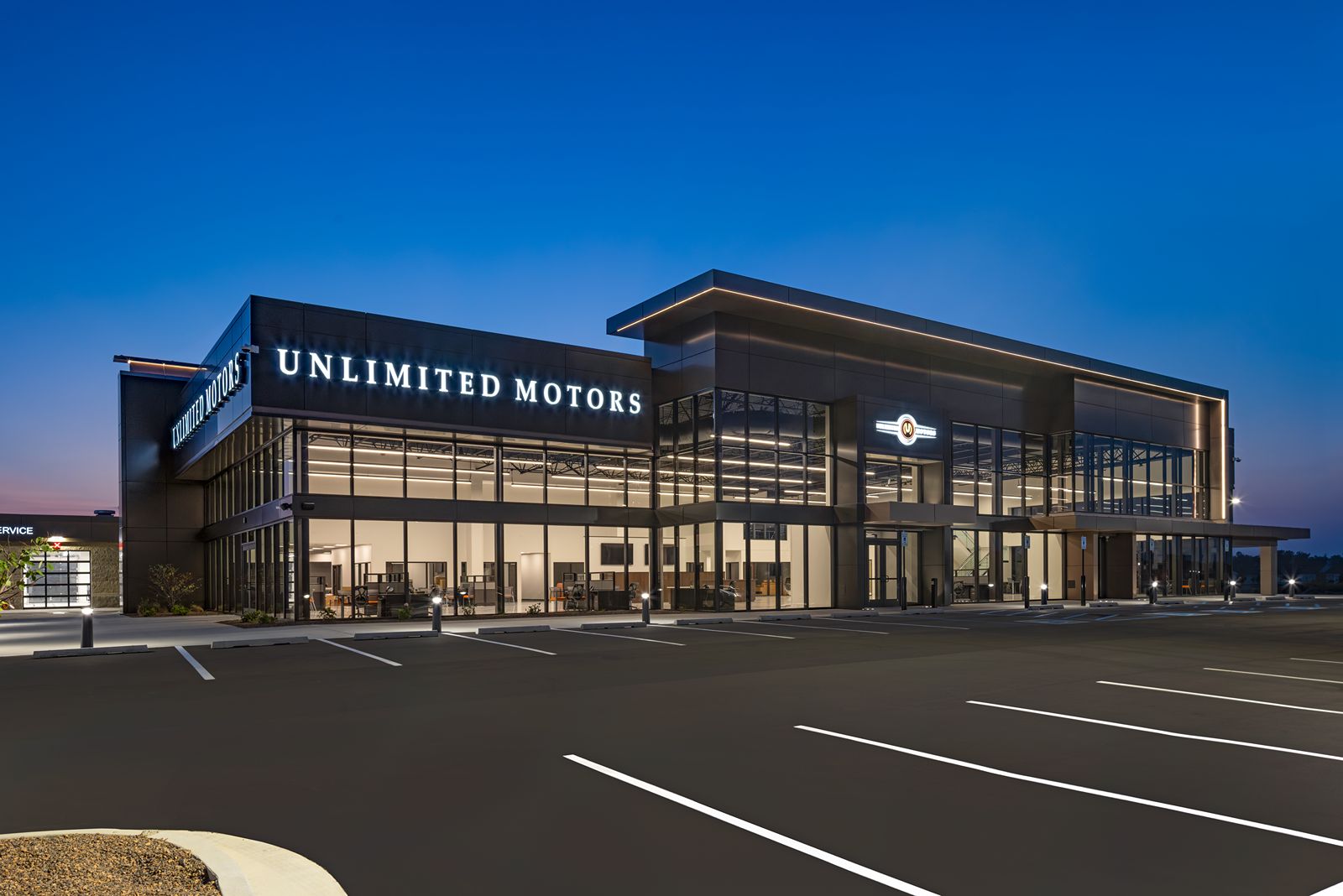
Gus Johnson Automotive Group operates one of the largest dealership networks in the Inland Northwest, with franchises spanning Ford, Lincoln, Chevrolet, Buick, GMC, and Cadillac across Spokane's major automotive corridors on North Division Street and East Sprague Avenue. The Gus Johnson portfolio represents a substantial commercial roofing profile: multiple showroom buildings, high-volume service centers, quick-lube facilities, and used-vehicle reconditioning shops — each with distinct roofing requirements shaped by Spokane's cold winters, wet springs, and warm dry summers.
Biological growth on skylights at Spokane dealerships is less severe than in Seattle but still a meaningful maintenance consideration. Spokane's fall-through-spring wet season, combined with cooler temperatures that extend surface drying time, creates conditions where algae and moss can establish on north-facing skylight surfaces and on shaded membrane sections around parapets within two to three years of a new installation. Premium showrooms with large overhead glazing areas benefit from annual cleaning with a biocide solution and inspection of the sealant joints at skylight curb perimeters, where Spokane's freeze-thaw cycling progressively deteriorates any sealant that holds standing water against it during winter months.
Spokane's winter snowfall — averaging 40 to 50 inches annually — creates loading and drainage considerations for dealership service department roofs that differ from the west side of the Cascades. While Spokane's snow is typically drier than Puget Sound snow, it accumulates to significant depth during multi-day events and can persist on rooftops for weeks in cold weather. Service department roofs with large mechanical screen walls or parapet configurations should be reviewed for snow drift load capacity, and drain strainers should be checked in early spring before melt season to ensure they are clear for the significant runoff volumes that can be generated when a full winter's snowpack melts over a few warm days.
Service department roofs at Spokane dealerships carry the standard load of automotive exhaust penetrations, HVAC curbs, and compressed-air distribution, plus the consideration that Spokane's cold winter climate creates condensation dynamics in service bays that differ from warmer markets. Heated service bays that maintain 65°F or higher while exterior temperatures are below zero create strong vapor pressure gradients that drive interior moisture toward the cold roof assembly. Proper vapor barrier placement on the interior side of the roof insulation, or a fully closed-cell spray foam insulation assembly, prevents the interstitial condensation that can saturate insulation from below without producing a visible roof leak.
Skylights at Spokane dealership showrooms face the combined challenge of biological growth during the wet season and freeze-thaw damage to perimeter sealants during winter. The recommended approach is to specify thermoplastic polyolefin (TPO) walkway pad protection around skylight curbs to prevent foot traffic damage during maintenance access, and to use a two-part urethane sealant at all skylight-to-curb interfaces rather than standard silicone, which has inferior adhesion to the surfaces common in Spokane's cold-temperature installation conditions and is more susceptible to freeze-thaw cycling damage at the joint interface.
Washington State Energy Code compliance for Spokane dealership re-roofing requires minimum above-deck insulation R-values, typically R-20 or higher for climate zone 5B — the designation for Spokane's cold, dry continental climate. Older dealership buildings constructed before 2010 are frequently under-insulated relative to current energy code, and a re-roofing project presents the most cost-effective opportunity to add insulation to the assembly. The combination of energy savings across Spokane's long heating season and the title 24-style documentation requirements for commercial permits makes insulation upgrading a project element with both regulatory and financial returns.
Spokane's June through September dry season provides an ideal window for dealership re-roofing work. Permits from the City of Spokane's Building Services department typically process in two to four weeks for standard commercial projects. Projects that involve structural changes — new rooftop HVAC, skylight removal or addition, or significant penetration modifications — require structural drawings stamped by a Washington-licensed structural engineer and may take four to six weeks for plan review. Beginning the permit process at least eight weeks before the planned construction start ensures that delays do not push the project into fall's less predictable weather.
Occupied dealership operations in Spokane during a re-roofing project benefit from the dry summer season's predictability. Contractors can work confidently without daily close-out weather concerns during July and August, allowing more aggressive daily production rates than would be safe in spring or fall. The flip side is that Spokane summer temperatures on a rooftop can reach 140°F to 160°F on membrane surfaces, creating genuine heat illness risk for roofing crews and requiring Washington Labor and Industries heat illness prevention compliance throughout the project.
Preventive maintenance for Spokane dealership roofs should include fall inspection in September specifically checking curb flashing sealants and drain strainers before winter, spring inspection in April after final snowmelt documenting any damage from freeze-thaw or snow loading, and annual skylight cleaning and seal inspection. An infrared moisture survey every four to five years identifies any wet insulation developing beneath the membrane from gradual seam or penetration leakage that has not yet produced a visible interior stain.
- Why does biological growth affect Spokane dealership skylights despite less rain than Seattle?
- Although Spokane receives only about 16 inches of annual precipitation, the cool fall-to-spring temperature regime extends drying time after each rain event, creating sustained surface wetness on shaded north-facing surfaces that is sufficient for moss and algae establishment within two to three wet seasons.
- What sealant type is recommended for Spokane dealership skylight-to-curb interfaces?
- Two-part urethane sealant is preferred over silicone for Spokane skylight applications. Urethane provides better adhesion to the surfaces common in cold-temperature Spokane installations and is more resistant to the freeze-thaw joint cycling that deteriorates silicone at skylight curb perimeters.
- What vapor barrier configuration is correct for Spokane dealership service roofs?
- The vapor barrier should be placed on the warm interior side of the insulation to prevent interior service bay moisture from migrating into the cold roof assembly. Alternatively, closed-cell spray foam insulation applied to the underside of the structural deck provides a fully conditioned assembly that eliminates the interstitial condensation risk.
- What is Spokane's energy code insulation requirement for dealership re-roofing?
- Washington State Energy Code climate zone 5B, applicable to Spokane, typically requires R-20 or higher above-deck insulation for commercial roof replacements. Many older Spokane dealerships are under-insulated relative to this standard, making a re-roofing project the most cost-effective time to add insulation.
- How far in advance should a Spokane dealership start the building permit process for a re-roof?
- Allow at least eight weeks before the planned construction start. Standard projects process in two to four weeks, but projects involving structural drawings or engineer-of-record stamps may take four to six weeks for plan review at the City of Spokane Building Services department.