

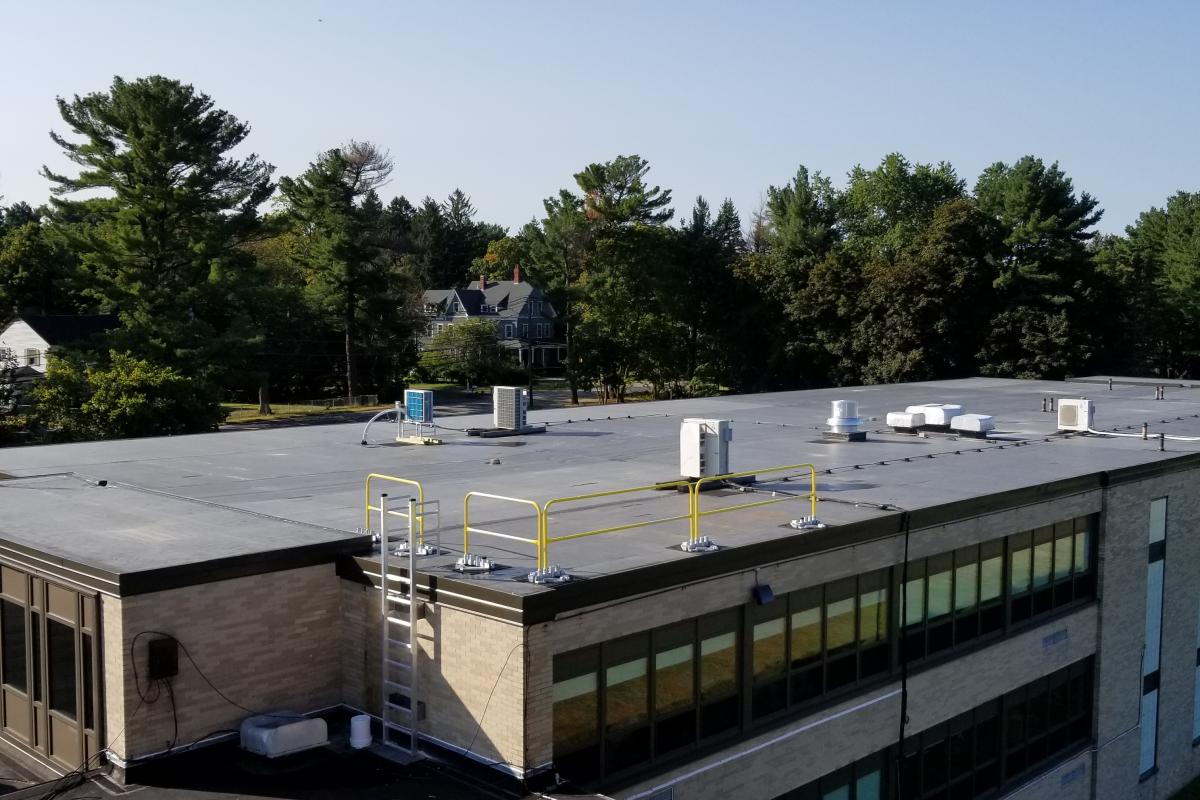
Spokane's government building inventory reflects the ambitions of a city that has served as the commercial and administrative hub of the Inland Northwest for over a century. The Spokane County Courthouse — an — anchors the civic core alongside the City Hall on West Spokane Falls Boulevard, the Spokane Police Department headquarters, and a network of fire stations serving a metropolitan area of half a million people. Spokane Public Library's Central Library and branch system, along with Spokane County's justice facilities and the Spokane Veterans Memorial Arena operated through the Public Facilities District, round out a government roofing market that demands specialized expertise in historic structures, cold-climate detailing, and Washington State's public procurement rules.
Public works roofing contracts in Spokane follow Washington State's competitive bidding statute, with both the City of Spokane and Spokane County posting solicitations on their respective procurement portals and the Washington Electronic Business Solution system. The small works roster system — available for projects under the formal bid threshold — allows qualified Spokane-area contractors to bid on smaller roofing jobs without full newspaper advertising, making roster registration through both entities a practical business development step. Above the threshold, sealed bids are publicly opened, and contract decision is made to the lowest responsible bidder. Washington's broad definition of "responsible" encompasses not just financial capacity but compliance history, prior project performance, and meeting all licensing and bonding prerequisites.
Washington State prevailing wages apply to all public works roofing contracts in Spokane, governed by the L&I wage schedule for Spokane County published each September. The rates for roofer journeymen and apprentices in Spokane are set separately from King County rates, reflecting Eastern Washington's distinct labor market. Contractors must post the applicable wage schedule at the job site, pay all workers at or above the published rates, and submit monthly certified payroll documentation to the public body. L&I's prevailing wage compliance unit conducts periodic audits of Spokane-area public works projects, and back-wage assessments carry penalties that quickly exceed any wage savings attempted through underpayment.
Spokane's climate is markedly different from the wet west side of the Cascades. The city receives around seventeen inches of annual precipitation — much of it as winter snow — combined with summer temperatures that regularly exceed ninety degrees. This continental climate creates thermal cycling that stresses flat-roof membrane systems through repeated freeze-thaw events, and the occasional heavy wet snow loads that Spokane receives from Cascade-influenced storms must be factored into roof structural loading assessments for older civic buildings. Fire stations on the South Hill and the East Side face particular snow accumulation patterns that should inform drain sizing and parapet height specifications on re-roofing projects.
The Spokane County Courthouse presents one of the most demanding historic roofing challenges in Eastern Washington. The building's Chateauesque roof profile — featuring steep-pitched copper-clad dormers, turrets, and a complex pattern of decorative metalwork — requires craftspeople with documented experience in historic metal roofing restoration. Any project touching the courthouse exterior must be coordinated with the Washington State Historic Preservation Office and may require Section 106 review depending on funding sources. The Spokane Historic Preservation Office, operating under the city's Community and Economic Development Department, also maintains a list of locally designated properties where certificate of appropriateness approval is required before visible roofing changes proceed.
Energy efficiency mandates in Spokane's government roofing are driven by Washington State's Energy Code, one of the most stringent in the nation. The Washington State Energy Code's requirements for continuous insulation in roof assemblies are particularly relevant for Spokane's cold winters, where thermal bridging through structural members represents a meaningful fraction of a building's heating load. Re-roofing projects on Spokane Public Works facilities must demonstrate compliance with the current energy code's R-value requirements, and project specifications issued by the city increasingly include insulation upgrade scopes as part of roofing replacements rather than treating them as separate, deferrable projects.
Bonding requirements for Spokane public works roofing follow Washington State's public works bonding statute, mandating performance and payment bonds at one hundred percent of the contract value for projects above the threshold. Retainage of five percent is withheld throughout the project and released after final acceptance and completion of the lien release process — a process that involves L&I clearance confirming no unpaid prevailing wage claims are outstanding. Contractors unfamiliar with Washington's retainage and lien release procedures should consult with legal counsel, as incomplete lien releases can delay retainage release by months and create significant cash flow pressure on smaller roofing firms.
Warranty terms demanded by Spokane government clients reflect a public-sector expectation of long asset life. The City of Spokane Facilities Operations Division expects manufacturer NDL warranties of at least twenty years on membrane systems and contractor workmanship warranties of five years minimum. For roofing systems on essential facilities like the Spokane Fire Department stations designated as emergency operations nodes, some specifications add a requirement that the contractor perform annual warranty inspections and submit inspection reports to the city during the workmanship warranty period. This ongoing inspection obligation should be factored into bid pricing as a real cost, not ignored as a boilerplate requirement.
Spokane's government roofing market rewards contractors who engage with the local government construction community through organizations like the Associated General Contractors of Washington's Inland Pacific Chapter and who follow the City of Spokane's published Capital Improvement Program for advance notice of upcoming roofing projects. The CIP, adopted by City Council each December, identifies roofing replacement projects by facility and planned fiscal year, giving well-prepared contractors the lead time needed to secure bonding capacity, assemble the right project team, and develop relationships with Public Works project managers before the formal bid process begins.
- What prevailing wage rates apply to roofing work on Spokane government buildings?
- Washington L&I publishes separate prevailing wage schedules for Spokane County, updated each September, with distinct rates for roofer journeymen and apprentices in Eastern Washington. Contractors must post the schedule at the job site, pay all workers at or above published rates, and submit monthly certified payroll to the public body. L&I audits Spokane-area public works projects and can assess back wages with penalties for any period of non-compliance.
- What historic approvals are required before reroofing the Spokane County Courthouse?
- The courthouse's Chateauesque exterior requires SHPO coordination and potentially Section 106 review if federal funding is involved, given its historic significance. The Spokane Historic Preservation Office also has jurisdiction over locally designated city properties, requiring a Certificate of Appropriateness before visible roofing alterations proceed. Contractors should engage preservation staff well before bid submission to understand material approval requirements for the complex copper and metal roofing elements.
- How does Spokane's climate affect roofing system specifications for civic buildings?
- Spokane's continental climate combines freeze-thaw cycling, occasional heavy snow loads, and hot summers that together stress flat-roof membrane systems significantly. Re-roofing scopes must address drain sizing for snow melt, parapet detailing to prevent ice dam formation, and membrane systems rated for low-temperature flexibility. Structural loading assessments are recommended before adding insulation mass to older civic buildings with unknown original design margins.
- What insulation requirements does Washington's Energy Code impose on Spokane roofing projects?
- Washington State's Energy Code — among the most stringent in the country — mandates continuous insulation in roof assemblies to specific R-value thresholds that address Spokane's cold-climate heating loads. Re-roofing projects on public buildings must demonstrate energy code compliance, and the city increasingly includes insulation upgrade scopes within roofing replacement contracts rather than deferring them. Product submittals must include thermal performance data sufficient to verify compliance.
- How does retainage work on Washington State public works roofing contracts in Spokane?
- Washington State requires five percent retainage to be withheld from progress payments on public works contracts and held until final acceptance and completion of all lien release requirements, including L&I clearance confirming no outstanding prevailing wage claims. Incomplete lien releases can delay retainage disbursement by months, creating significant cash flow pressure. Contractors should engage legal counsel familiar with Washington public works procedures to manage the lien release process efficiently.