

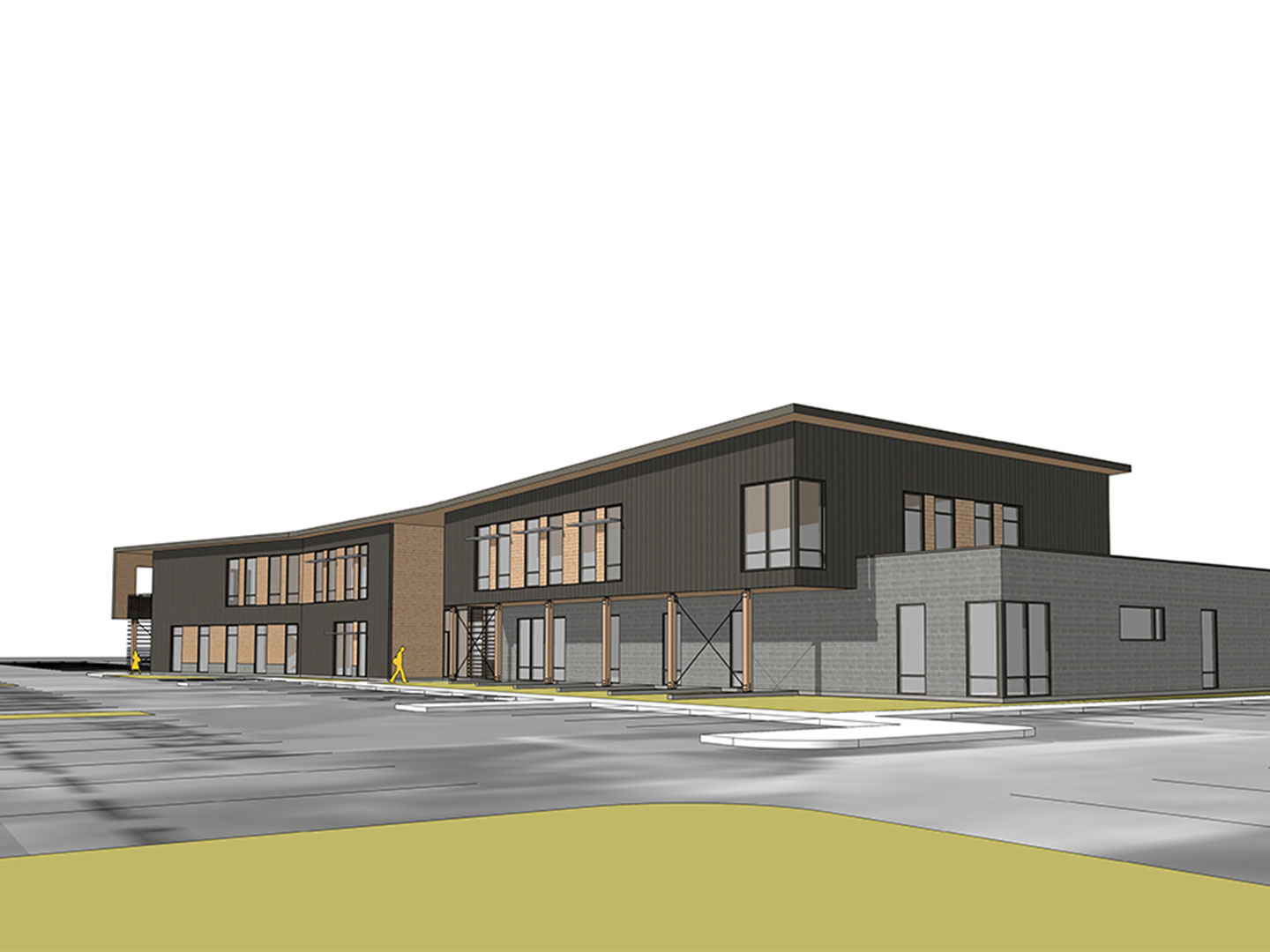
MultiCare Deaconess Hospital in Spokane serves as one of the Inland Northwest's most important regional medical facilities, and its campus in the South Hill neighborhood represents the kind of complex, multi-building healthcare environment where roofing work demands a level of planning, infection control discipline, and operational coordination that far exceeds standard commercial practice. Spokane's climate imposes genuine performance demands on healthcare roofing systems — significant winter snowfall, freezing temperatures, biological growth during wet shoulder seasons, and hot dry summers that impose thermal cycling stress — all while the hospital continues to operate around the clock with no possibility of shutdown. Our healthcare roofing team meets every one of these demands on every MultiCare Deaconess project we undertake.
Infection control risk assessment is the operational foundation of every Spokane healthcare roofing project. The ICRA framework classifies construction activities by their potential to generate airborne pathogens and defines containment requirements based on proximity to immunocompromised patient populations. We prepare written ICRA plans and submit them to the facility's infection control practitioner for review before mobilizing on any healthcare building. Containment barriers, negative pressure systems where adjacency analysis requires them, HEPA-filtered exhaust ventilation, and debris management protocols are standard features of our Spokane healthcare site plans. Crew training on these requirements is completed before work begins on any healthcare campus.
Snow load management is a genuine engineering consideration on the Deaconess campus. Spokane's winter snowfall — heavier in the hills above downtown and in the Spokane Valley than at lower elevations — creates structural loading demands that must be addressed in roof design for flat-roofed hospital buildings. We specify tapered insulation to maintain positive drainage even when portions of the membrane surface are frozen, recommend heated drain bowls for all interior drains, and provide overflow scupper protection that activates before ponding reaches structurally significant depths. Safe roof access during winter maintenance is designed into every Spokane healthcare roof we install.
Biological growth during Spokane's wet shoulder seasons affects hospital roofs as it does all commercial buildings in the Inland Northwest, but the implications on a healthcare campus are more serious than elsewhere. Moss penetration of membrane seams on a hospital roof creates water infiltration risk into patient care areas. We perform professional biological removal as a precondition to every healthcare roof assessment in Spokane, ensuring accurate condition documentation, and we recommend biennial professional treatment as part of the healthcare maintenance program.
The 24/7 nature of hospital operations at Deaconess means every work phase must be coordinated with the facilities team and, where required, with clinical department supervisors. Penetration openings, heavy equipment operation, and membrane demolition are scheduled during periods of lowest clinical sensitivity in adjacent areas, with explicit advance notification to the relevant clinical and facilities contacts. Every penetration is temporarily sealed at the end of each work period, and all open membrane areas are protected against overnight and weekend weather.
Hospital roof penetrations in Spokane serve critical systems that cannot tolerate water intrusion — HVAC units supplying sterile care environments, medical gas lines, emergency generator exhaust systems, and communications infrastructure. We apply multi-step flashing sequences at every penetration, verify sealant compatibility with the primary membrane, and probe-test every penetration flashing before completing any work area. As-built penetration documentation is a standard part of our close-out package for healthcare clients.
Washington State Energy Code requirements apply to re-roofing projects on Spokane healthcare buildings, and Spokane's inland climate zone has specific insulation requirements that reflect the city's cold winters. We design compliant assemblies, document compliance in permit submittals, and select insulation products with vapor management characteristics appropriate for the cold-climate condensation risk. Properly insulated hospital roofs save measurable energy costs in a facility type that uses enormous amounts of energy per square foot.
Sterile environment requirements in MultiCare Deaconess's operating suites and critical care units are mapped before the project begins in collaboration with the infection control and facilities teams. Access routes, staging areas, and work sequencing are planned to maintain physical separation between construction activity and sterile zones throughout the project. Pre-notification to clinical supervisors is standard before any work phase that could affect clinical areas, however indirectly.
Every Spokane healthcare project we complete is backed by manufacturer material warranties and our own labor guarantee. Post-project documentation includes as-built drawings, ICRA compliance records, energy code compliance certificates, and warranty documents. We are committed to being the long-term roofing partner for MultiCare Deaconess and other Spokane healthcare facilities. Contact our healthcare division to schedule a campus assessment or discuss a specific project.
- How do you comply with ICRA requirements on Spokane healthcare roof projects?
- We develop written ICRA plans approved by the facility's infection control practitioner, specifying containment, negative pressure, and HEPA filtration based on work activity classification and patient area adjacency. All crew members receive site-specific training before work begins.
- How significant is snow load on Spokane hospital roofs?
- Significant. We specify tapered insulation, heated drain bowls, and overflow protection designed for Spokane's winter accumulation scenarios. Safe roof access systems allow facilities staff to manage heavy snow events between service calls.
- Does biological growth affect Spokane hospital roofs?
- Yes. Moss establishes during wet shoulder seasons and can penetrate membrane seams over time. We perform professional cleaning before assessment and recommend biennial professional treatment as part of the healthcare maintenance program.
- How do you handle penetration waterproofing on Spokane hospital buildings?
- Multi-step flashing sequences, compatible sealants, and probe-testing of all penetrations are standard. As-built penetration documentation is delivered to the facilities team at project close-out.
- What energy code requirements apply to Spokane healthcare roofing?
- Washington State Energy Code prescribes minimum insulation R-values for Spokane's climate zone. We design compliant assemblies with vapor management appropriate for the cold-climate condensation risk and document compliance in permit submittals.