

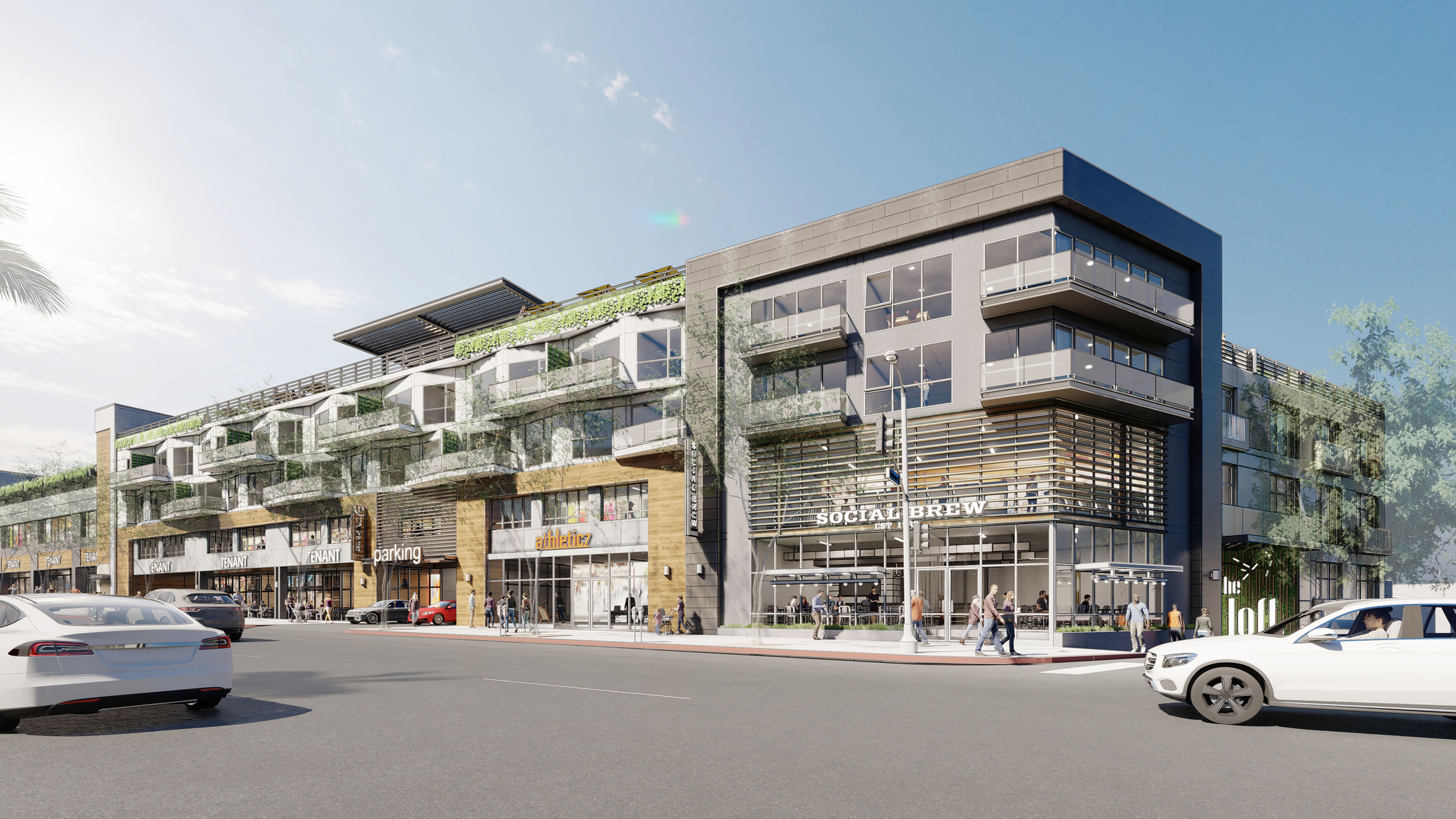
Spokane's downtown renaissance has centered on the University District, the Centennial Trail corridor, and the mixed-use infill development around the newly expanded Spokane Transit Authority Plaza. Buildings that layer culinary markets, creative offices, and medical technology startups at street level beneath market-rate condominiums and workforce apartments represent the city's most ambitious effort to densify its historically low-rise commercial core. These projects bring commercial roofing into a new level of prominence in a city where single-story retail and industrial construction previously defined the trade's workload. The firms that are investing in mixed-use roofing expertise now are building the relationships that will define the Spokane commercial market for the next 20 years.
Spokane's continental climate delivers weather extremes that few Pacific Northwest cities experience. Unlike Seattle's marine-moderated conditions, Spokane sits east of the Cascades in a dry, high-desert climate that swings between July temperatures above 95°F and January cold snaps below minus 15°F. On mixed-use buildings in the downtown core, that thermal range creates stress cycles in roofing assemblies that require material specifications more aggressive than those standard for the Pacific Northwest label. TPO membranes must be selected for cold-temperature flexibility — not all manufacturers' products perform equally well below minus 20°F — and insulation fastener patterns must account for the wind loads that accompany Spokane's periodic cold-air outflow events from the Columbia Basin.
Snow and ice management is a defining operational challenge for Spokane mixed-use building owners. The city averages 45 inches of annual snowfall, and multi-level rooflines on mixed-use buildings create drift accumulation patterns against parapet walls and equipment enclosures that can multiply design snow loads by factors of two to three. Commercial roofers who work in Spokane account for these drift multiples explicitly in their fastener pattern specifications, particularly at parapet edges and lower roof levels where upper-story snow can slide and accumulate. Buildings near Riverfront Park's exposed corridor are especially vulnerable to wind-driven snow accumulation that tests membrane-to-deck attachment beyond what standard prescriptive tables address.
The University District mixed-use projects introduce an occupant profile — students, researchers, and medical professionals operating on 24-hour schedules — that places unusual demands on the roofing assembly's performance in one specific area: vibration isolation. Medical imaging equipment, server rooms supporting biotech research, and laboratory HVAC systems all generate mechanical vibration that transmits through structural connections into the residential floors above. Commercial roofers who install vibration-decoupled curbs beneath rooftop mechanical units, flexible pipe connections at penetrations, and resilient underlayments beneath rooftop mechanical room floors address these transmission paths at the source. Building managers in the University District who inherit these details from a conscientious roofing contractor are spared the complaints and lease-termination risks that vibration-sensitive tenants bring.
Spokane's water conservation consciousness — shaped by the Spokane Aquifer's role as the city's primary drinking water source — has influenced mixed-use development practices in ways that affect roofing. Stormwater retention and infiltration are citywide priorities, and green roofs on mixed-use podium decks qualify for stormwater fee credits that provide measurable financial return over a 20-year period. The Spokane County Regional Stormwater Manual provides specific credit calculations for green roof retention depth, and commercial roofers who can speak to those calculations in early project conversations help developers make financially informed decisions about green roof inclusion rather than treating it as an add-cost aesthetic choice.
Multi-level rooflines on Spokane's newer mixed-use towers — particularly the stepped-profile buildings near the STA Plaza and the Saranac Building adaptive reuse corridor — create complex waterproofing challenges at every level transition. Where a residential setback terrace meets the wall of the floor above, the upright parapet face, the horizontal terrace plane, and the corner detail at their intersection all require waterproofing continuity through a three-dimensional geometry that flat-roof experience alone does not prepare a contractor for. Self-adhered membranes that can conform to complex shapes, reinforced at inside corners with fabric-embedded liquid-applied patches, provide the continuity that pre-formed flashings cannot achieve on irregular geometries.
Spokane's mixed-use development occasionally involves historic preservation requirements at the perimeter of the downtown core, where buildings from the city's early-20th-century commercial boom remain structurally sound but have aging roofing assemblies that cannot be simply overlaid. The Davenport Arts District buildings, for instance, combine original masonry facades with roof structures that have been modified repeatedly over a century. Commercial roofers who approach these structures with moisture surveys, substrate sampling, and load analysis before specifying new assemblies avoid the adhesion failures that result from installing contemporary membranes on compromised substrates. Proactive forensic assessment is the differentiator between a re-roofing project that lasts 25 years and one that requires emergency repair in year four.
The stakeholder landscape on Spokane mixed-use projects is evolving as the city attracts more institutional investors alongside the local developers who have traditionally dominated its real estate market. When a national REIT acquires the commercial podium of a mixed-use building whose residential floors are held by a local condo association, the warranty documentation standards and maintenance expectation gaps between the two ownership cultures can create immediate friction. Commercial roofers who produce close-out packages that explicitly address these institutional-versus-residential expectation differences — with separate maintenance protocols written for professional property managers versus HOA volunteers — serve both ownership types effectively and reduce the post-construction disputes that damage contractor reputations.
Spokane's growth story — anchored by Washington State University's Spokane campus expansion, the regional healthcare cluster, and improving Interstate 90 logistics connectivity — sustains mixed-use development demand that will reshape the downtown for years to come. Commercial roofing contractors who build Spokane-specific expertise — in continental climate material performance, University District occupancy demands, and the city's evolving regulatory environment for stormwater and energy — are making an investment in market position that will compound over time. Spokane's mixed-use sector is still early in its maturation cycle, and the contractors who establish technical credibility now will define the standard against which others are measured.
- What TPO membrane thickness is appropriate for Spokane's continental climate temperature extremes?
- 60-mil TPO is the minimum recommended thickness for Spokane mixed-use applications, with 80-mil preferred at perimeter and corner zones where UV exposure and thermal cycling are most severe. Not all TPO formulations have the same cold-temperature flexibility; specifiers should require independent low-temperature flexibility test data showing acceptable performance at minus 20°F, which is achievable under Spokane conditions. Membrane seam widths should be increased beyond the standard 1.5-inch minimum to provide greater weld area redundancy at the temperature extremes.
- How are snow drift loads calculated for Spokane mixed-use buildings with multiple roof levels?
- ASCE 7 provides drift load calculation procedures for upper-to-lower roof transitions, where accumulated drift on the lower roof can exceed the balanced snow load by a factor of two or more depending on the height difference and upwind fetch. The structural engineer calculates the drift surcharge for each transition on the building, and the roofing contractor's fastening pattern must be calibrated to the highest load zone encountered. Parapet walls on both levels should be checked for the combined wind-plus-drift lateral load condition, which sometimes requires supplemental attachment at the parapet base.
- What stormwater credit does Spokane provide for green roofs on mixed-use buildings?
- The Spokane County Regional Stormwater Manual provides retention credit for green roof assemblies that meet minimum growing media depth requirements, with deeper assemblies receiving proportionally larger retention credits. The credit reduces the required on-site detention volume, which can eliminate the need for underground detention tanks that would otherwise consume valuable basement or structured parking space. A roofing contractor who can provide the green roof assembly's tested retention data in a format compatible with the county's stormwater manual calculations helps the civil engineer complete the stormwater management plan efficiently.
- How does the Spokane University District mixed-use market differ from standard commercial roofing projects?
- University District buildings often house laboratory and medical technology tenants whose mechanical loads are heavier and more variable than standard office or retail equipment. Rooftop HVAC systems for these tenants may be replaced or upgraded on 5- to 7-year cycles as research needs evolve, creating repeated penetration and curb work that must be integrated into the existing waterproofing system each time. Roofing contractors who establish service contracts with University District building owners are positioned to manage these equipment upgrades with waterproofing continuity in mind rather than responding to emergency calls after a failed penetration seal.
- What historic building substrate issues should Spokane commercial roofers assess before re-roofing Davenport Arts District mixed-use buildings?
- Original wood plank decking on Davenport District buildings may be structurally sound but saturated with moisture from decades of minor leak events, and installing a new membrane over wet wood creates blistering and adhesion failures within months. A nuclear gauge moisture survey or core sampling program identifies the extent of wet wood before commitment to a new system. When wet areas are localized, section replacement or drying procedures can address the problem; widespread saturation may require a complete deck replacement that the owner's budget must accommodate before re-roofing begins.