

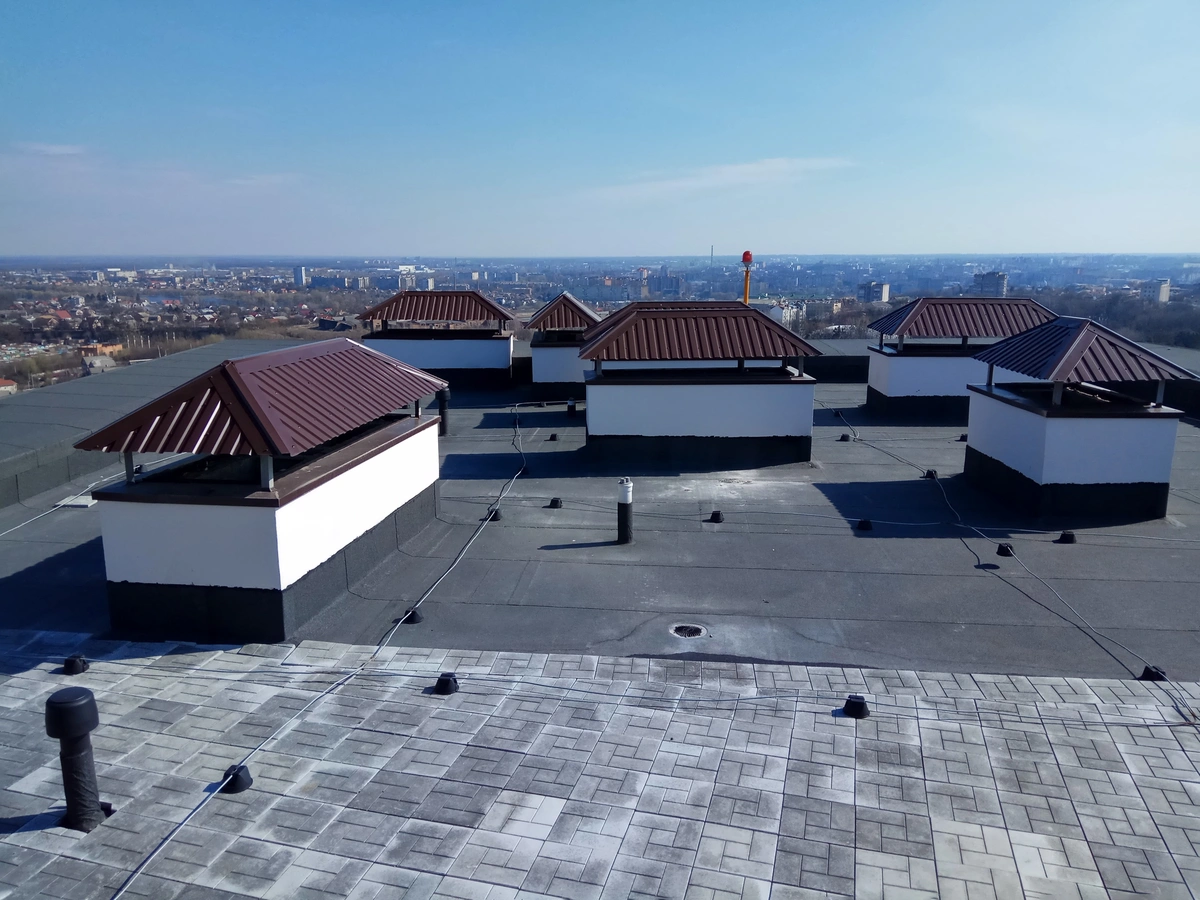
Washington Trust Financial Center, the Class A high-rise that anchors downtown Spokane's professional office market at Riverside Avenue, and the Washington State University medical school buildings developing on the east end of the University District represent the range of occupied office building roofing demands in the Inland Empire. Spokane's office market mixes financial services, healthcare administration, government, and the growing university and research sector — tenants with professional building expectations who will notice and report maintenance deficiencies quickly. Managing a re-roofing project on any of these buildings requires the same core occupied-building competencies that apply in Seattle or Portland, adapted for Spokane's specific climate extremes.
Spokane's continental climate — hot dry summers and cold winters with significant freeze-thaw cycling — creates a different roofing challenge than the Pacific Northwest coast. While Seattle office buildings contend primarily with persistent moisture and biological growth, Spokane office buildings deal with thermal shock: temperatures swinging from 100°F in August to -10°F in January, with dozens of intermediate freeze-thaw cycles in fall and spring. Penetration flashings and parapet cap details that would last 20 years in Portland may show stress cracks in Spokane within 8 to 10 years if they're not designed for this thermal range. We specify cold-temperature flexible sealants, thermally isolated metal flashings, and expansion-accommodating coping systems on every Spokane office project as a baseline rather than a premium option.
EPDM is the preferred membrane for Spokane Class A office re-roofing because its rubber compound maintains elasticity throughout Spokane's full temperature range without surface crazing or seam stress. Fully adhered EPDM on a Spokane office building provides both wind uplift resistance and the flexibility needed for thermal cycling at parapet flashings. White TPO is an increasingly popular choice on new construction where energy efficiency and cool-roof credits are priorities, and we have successfully installed TPO on occupied Spokane office buildings with good results when the product's cold-temperature rating is verified and installation is scheduled within the appropriate temperature window.
Washington State Energy Code requirements apply to Spokane office buildings in Climate Zone 5, requiring R-25 minimum continuous insulation. Office buildings in Spokane have a particularly compelling insulation payback case because the building type tends to have high internal heat gains from lighting and occupancy that reduce heating loads but that make cooling loads significant in Spokane's hot summers. Roof insulation reduces the cooling load during Spokane's July and August heat, and the savings are real and measurable. We prepare an energy model estimate for every Spokane office re-roofing project to quantify the savings from code-minimum insulation versus a premium insulation specification.
Occupied building protocols in Spokane's professional market focus on communication and predictability. Spokane's banking and healthcare tenants — particularly those in the larger office complexes along Riverside Avenue and in the Spokane Valley medical office corridor — value being informed more than they value accommodating the roofing contractor's preferred schedule. We provide a detailed project calendar to each tenant before work begins, identify the two or three days in the schedule that will be most disruptive, and give tenants 72-hour notice before those specific days. For medical office buildings, we confirm with the practice manager that the most disruptive work phases don't coincide with high-volume patient days.
HVAC coordination in Spokane requires equal attention to heating and cooling because both systems are critical. The rooftop gas package units that are common on Spokane's mid-rise office buildings provide both heating in winter and cooling in summer; a unit outage affects occupant comfort year-round. We plan unit relocation sequences to avoid disconnecting any unit during the peak heating or cooling seasons — generally December through February for heating and July through August for cooling — and we coordinate backup heating and cooling capacity with the mechanical contractor before any unit is taken offline.
Wildfire smoke management is a Spokane-specific building concern that has gained urgency over the last decade. Rooftop HVAC fresh air intakes on Spokane office buildings draw in ambient air that during July, August, and September may carry heavy wildfire smoke. This is not a roofing problem per se, but roofing contractors who replace HVAC curbs or fresh air intake housings during a project need to confirm that the replacement hardware meets the same air filtration provisions as what it replaces. We document all HVAC hardware replacement specifications and confirm with the building's mechanical contractor that fresh air intake filter housings are compatible with the building's air quality management system.
Lease obligations for Spokane Class A office tenants — particularly state and federal government agency tenants who occupy significant space in downtown Spokane's office market — may include roofing maintenance requirements that are tied to federal facility standards. GSA-leased space and state agency-leased space both have building maintenance standards that specify inspection frequencies and response time commitments for roof maintenance issues. We have provided maintenance program documentation structured to meet GSA standards for Spokane office building owners with federal tenants, and we can structure maintenance agreements to satisfy the compliance documentation requirements of state agency lease auditors.
Parapet cap details on downtown Spokane Class A office buildings are subject to the full range of Spokane's thermal extremes plus wind loads from the Inland Empire's periodic Chinook wind events, which can produce sustained 50 mph winds and gusts above 70 mph in the downtown area. Coping caps must be anchored to continuous concealed cleats, with end laps sealed against wind-driven rain, and with expansion joints at intervals appropriate for the coping material's thermal expansion coefficient. Aluminum coping on a Spokane building will see surface temperature swings of 150°F between winter night and summer day — expansion and contraction that must be accommodated in the joint design or the coping will buckle and separate at the laps.
- How does Spokane's climate affect office building roof flashing longevity?
- Spokane's 130°F annual temperature swing between summer peak and winter low creates thermal cycling stress that degrades rigid materials faster than in moderate climates. Penetration flashings and parapet caps specified for a coastal Pacific Northwest climate may show stress cracking in Spokane within eight to ten years. Specify cold-temperature flexible sealants, thermally isolated metal flashings with designed expansion joints, and fully adhered membrane systems that accommodate thermal movement at base flashings.
- Does Washington State Energy Code apply to Spokane office re-roofs?
- Yes. Spokane is in Climate Zone 5 under the Washington State Energy Code, requiring R-25 minimum continuous insulation for low-slope commercial roofs. Re-roofing projects that disturb the insulation layer trigger the upgrade requirement. Energy modeling can demonstrate compliance through alternative measures if the prescriptive insulation level creates structural load or cost constraints.
- How do you manage a Spokane office re-roof during wildfire smoke season?
- Wildfire smoke affects rooftop work through air quality limits for outdoor workers and through the need to protect open insulation from smoke contamination during extended tear-off phases. We monitor Washington State DOE air quality index data and can adjust the work schedule during unhealthy air quality days. HVAC equipment relocated during the project is covered or filtered during smoke events to prevent smoke infiltration into the building through disconnected ductwork.
- What is a Chinook wind event and how does it affect my Spokane office building roof?
- Chinook events are warm, dry wind events driven by air descending the east slope of the Cascade Mountains. In Spokane, they can produce sustained winds of 40 to 50 mph and gusts above 70 mph. These events occur most commonly in fall and winter and can dislodge improperly anchored coping, edge metal, and equipment covers. Continuous concealed cleats under all coping caps and mechanically fastened edge metal are the prevention. Post-Chinook inspections should check coping and edge metal for loosening before the next rain event.
- Do government agency tenants have special roofing maintenance documentation requirements?
- Yes. GSA and Washington State agency lease standards typically specify inspection frequencies, response time requirements for reported leaks, and documentation standards for maintenance records. We can structure maintenance agreements and provide inspection report templates that satisfy these documentation requirements. If your building houses federal or state agency tenants, share the relevant lease provisions with your roofing contractor before finalizing a maintenance agreement.